Severe knee pain can reduce your walking tolerance within weeks and lead to stiffness, muscle weakness, poor sleep, falls and loss of independence over time. You will learn which symptoms need emergency care, how different causes progress, what an evaluation involves and when structured treatment or a surgical consultation becomes reasonable.
Key takeaways
- Seek emergency care for fever, a hot swollen knee, deformity, or inability to bear weight.
- Untreated knee pain can weaken muscles, alter walking, and reduce independence.
- The cause—arthritis, injury, gout, or infection—determines the right treatment.
- Discuss knee replacement when pain and mobility limits persist despite nonsurgical treatment.
When Severe Knee Pain Needs Emergency Care in Pune
Seek emergency care now for a hot, swollen knee with fever or chills, sudden inability to bear weight, a visible deformity, or severe pain after a fall. These signs can indicate infection, fracture, or a dislocation, and waiting for a routine appointment can allow permanent joint damage or serious illness.
| Symptom | Why it matters | Action |
|---|---|---|
| Hot, swollen knee plus fever or feeling unwell | Septic arthritis can rapidly damage cartilage and spread infection | Go to an emergency department today |
| Inability to bear weight after an injury | Fracture, dislocation, or major ligament injury is possible | Do not walk on it; seek emergency assessment |
| Visible deformity or rapidly increasing swelling | The joint may be displaced or bleeding internally | Get immediate care |
| Sudden calf swelling, chest pain, or breathlessness | A blood clot may have travelled to the lungs | Call emergency services immediately |
| Knee locked straight or bent | A displaced meniscus fragment or loose body may block movement | Seek same-day urgent assessment |
| Severe pain after a fall, especially with numbness or a cold foot | Nerve or blood-vessel injury needs prompt attention | Go to emergency care |
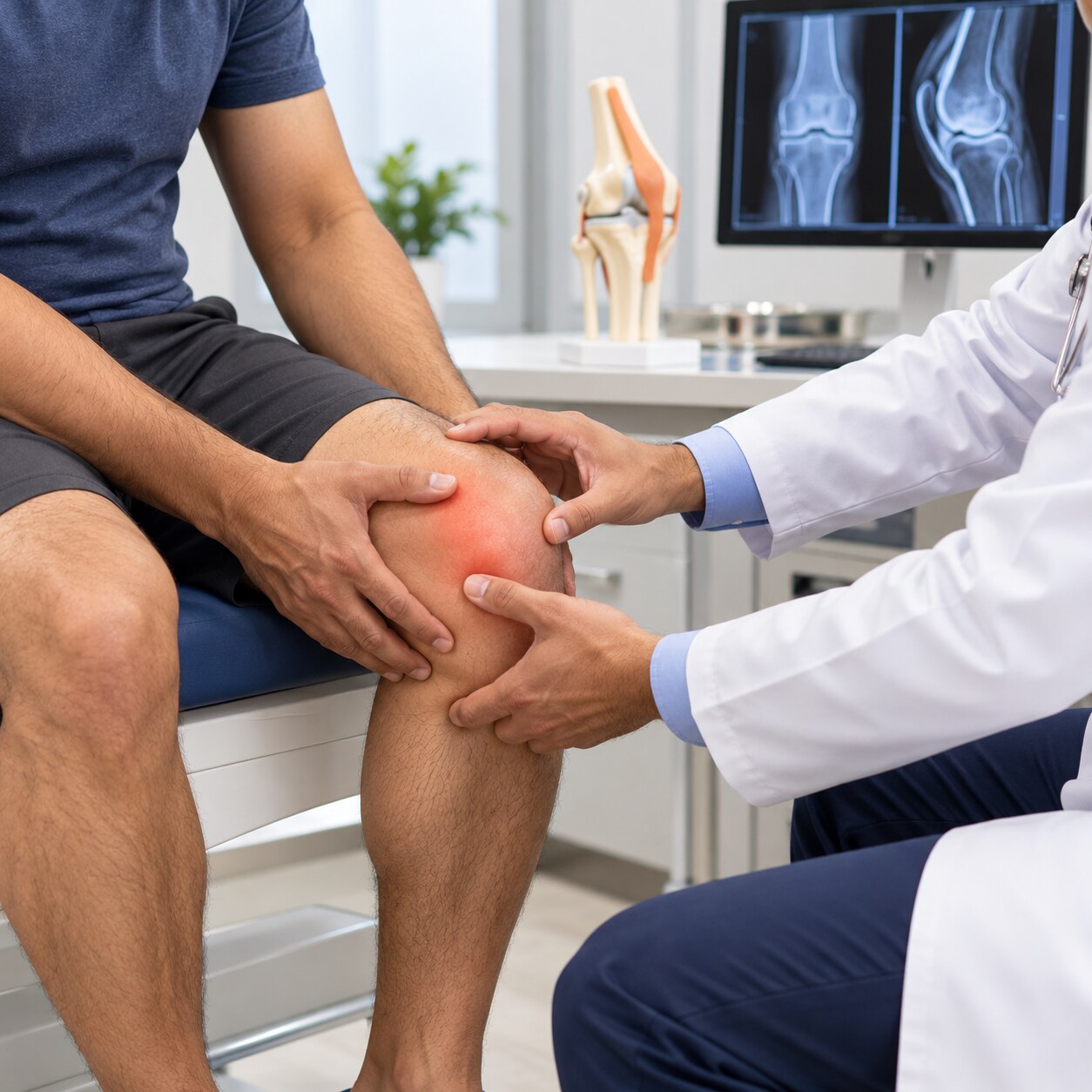
Do not treat severe knee pain untreated in pune as ordinary age-related wear. Even without these red flags, arrange clinical evaluation when pain prevents normal weight-bearing, persists despite rest, or repeatedly wakes you at night. Severe pain does not prove severe X-ray damage, and an examination—not an X-ray alone—determines the next step.
How Untreated Pain Changes Walking, Strength and Independence
Within weeks, severe knee pain can shorten your walking distance and make ordinary movement harder. You begin protecting the painful leg, so your gait changes; the quadriceps receives less work and loses strength.
- Over weeks, reduced activity increases stiffness and weakens the muscles that steady the knee. Balance can worsen, making a misstep more likely.
- Over months, walking and exercise may feel increasingly demanding. Poor sleep from night pain, low mood, and weight gain can add load to the joint and reinforce the pain–inactivity cycle.
- Over years, long term knee pain problems can turn routine tasks into assisted tasks. Loss of mobility may affect your ability to work, travel, exercise, or manage yourself independently.
Complete rest rarely solves this decline. A clinician-guided exercise programme tailored to your knee can preserve function, while pushing through sharp pain can aggravate an injury and avoiding all movement promotes deconditioning.
Do not wait for months if severe pain prevents normal weight-bearing, persists despite rest, or repeatedly wakes you. An examination can identify the cause and set a safer plan before weakness and altered movement become harder to reverse.
Why the Cause Matters: Arthritis, Injury, Gout or Infection
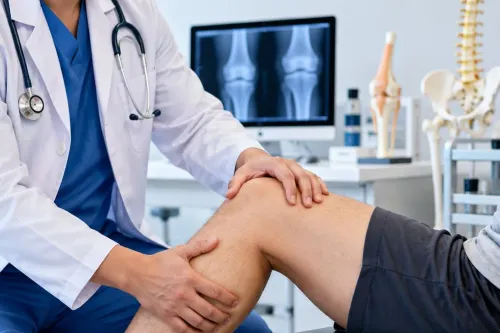
Severe knee pain is a symptom, not a diagnosis. Clinicians compare how it began, where it hurts, whether the knee is hot or swollen, and whether you have locking, instability, fever or pain in other joints.
| Condition | Clues clinicians look for | Tests that may be needed |
|---|---|---|
| Osteoarthritis | Gradual pain, stiffness after rest, activity-related symptoms | Weight-bearing X-rays; examination of movement and alignment |
| Meniscus or ligament injury | Pain after twisting or sport, clicking, locking or giving way | Clinical stability tests; MRI when the result will change treatment |
| Fracture | Pain after a fall or direct blow, marked tenderness, inability to bear weight or deformity | X-ray; CT for complex fractures |
| Gout or inflammatory arthritis | Sudden severe swelling, warmth, recurrent attacks or several painful joints | Joint-fluid analysis for crystals; blood tests for inflammation and related disease |
| Joint infection | Rapidly worsening pain, hot swollen knee, fever, chills or feeling acutely unwell | Urgent aspiration for cell count, Gram stain and culture; blood tests and blood cultures |
A normal uric-acid result does not rule out gout, and a raised result does not prove it. Joint aspiration is especially important when infection is possible because septic arthritis can rapidly destroy cartilage.
X-rays show bone and joint-space changes, but pain and X-ray severity do not always match. The decision should combine examination findings, test results, walking ability and your goals. Seek prompt assessment if severe pain prevents weight-bearing, persists despite rest or repeatedly interrupts sleep.
What Treatment Can Prevent Further Decline Before Surgery
Complete rest usually worsens the pain–inactivity cycle. The thigh muscles lose strength, the knee stiffens, and ordinary walking becomes harder. A clinician should confirm the cause before you begin, because arthritis, a meniscus tear, gout, infection, and fracture need different treatment.
A practical knee degeneration treatment in Pune usually combines:
1. Physiotherapy: Start with range-of-motion work, quadriceps and hip strengthening, then add walking, cycling, or aquatic exercise. A physiotherapist can adjust repetitions and technique when pain makes independent exercise unsafe.
2. Pacing: Exercise in short sessions and increase workload gradually. Mild, temporary discomfort can occur; sharp pain, increasing swelling, or pain that remains worse the next day means the programme needs review.
3. Pain control: A clinician may recommend a topical anti-inflammatory gel or another medicine after checking kidney disease, stomach ulcers, blood thinners, allergies, and other risks. Do not borrow someone else’s tablets.
4. Load reduction: Weight reduction can reduce stress on the knee when you are overweight. A cane held in the opposite hand, supportive footwear, or a brace can also make walking safer while strength returns.
5. Targeted treatment: Gout, inflammatory arthritis, a meniscus injury, or infection requires condition-specific care rather than months of exercise alone. Seek prompt assessment if the knee locks, repeatedly gives way, becomes hot and swollen, or you cannot bear weight.
These steps can preserve mobility and delay surgery, but they cannot repair every structural problem. Reassess the plan if sleep, work, or walking remains restricted despite several weeks of treatment.
When to Discuss Knee Replacement and Robotic Assistance
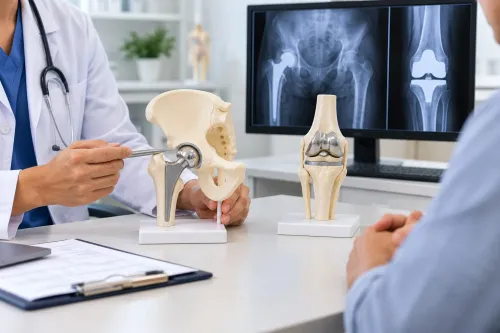
Knee replacement is worth discussing when pain, stiffness, deformity or limited walking substantially reduces your quality of life, and exercise, medicines, injections or other non-surgical care has failed or is unsuitable. An X-ray showing arthritis alone is not enough; confirm that the diagnosis, examination findings and daily limitations point to replacement.
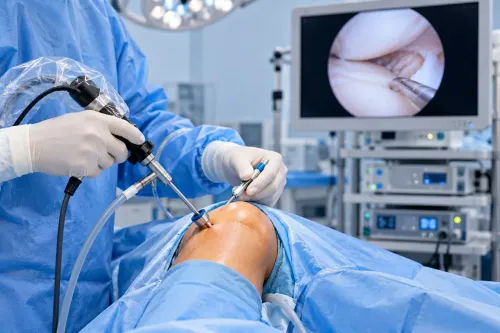
Do not assume a robot makes surgery necessary or guarantees less pain, better movement or longer implant survival. Robotic assistance can help plan bone cuts and implant positioning, but your surgeon’s judgement, implant choice, complication risks and rehabilitation still shape the result.
Before booking a robotic knee replacement consultation in Pune, ask:
- What is causing my symptoms, and why is replacement better than continued non-surgical care or another procedure?
- What specific advantage would robotic assistance provide in my knee, and would conventional replacement offer a comparable result?
- Which implant design and materials do you recommend, and why?
- What complications should I understand, including infection, blood clots, stiffness, nerve injury, persistent pain and revision surgery?
- How long will I need walking support, physiotherapy and help at home, and when can I drive or return to work?
- What preparation reduces risk, such as controlling diabetes, stopping smoking or treating a skin infection?
Dr Amit Laturkar Orthopedic in Aundh | 08048035468 can help you discuss whether the diagnosis, goals and previous treatment justify referral for replacement rather than choosing technology first.
Related services
Sports Injury Management in Pune Sports Injury Treatment in Aundh, Sanghvi, Pune Dr. Amit Mohan Laturkar is the Leading Sports Injury Management Specialist in Aundh, Sanghvi and Pune. View service → |
Joint Replacement (Hip & Knee) Surgeon in Pune Joint Replacement (Hip & Knee) Surgeon in Aundh, Sanghvi, Pune Dr. Amit Mohan Laturkar is the Leading Joint Replacement (Hip & Knee) Surgeon in Aundh, Sanghvi and Pune. Dr. View service → |
Frequently asked questions
When does severe knee pain require emergency care in Pune?
Seek emergency care for a hot, swollen knee with fever or chills, sudden inability to bear weight, visible deformity, or severe pain after a fall.
What problems can long-term knee pain cause?
Long-term knee pain can change your walking pattern, weaken supporting muscles, reduce mobility, and make everyday activities less independent.
Why does the cause of knee pain matter?
Arthritis, injury, gout, and infection require different evaluations and treatments, so identifying the cause helps prevent worsening damage.
When should you discuss knee replacement or robotic assistance?
Discuss knee replacement when persistent pain and reduced mobility continue despite appropriate nonsurgical treatment; ask whether robotic assistance suits your anatomy and surgical plan.
Related services
Arthroscopy for Knee and Shoulder Surgeon in Pune Arthroscopy for Knee and Shoulder (700+ surgeries) Dr. Amit Mohan Laturkar is the Best Arthroscopy for Knee and Shoulder Surgeon in Pune. Dr. View service → |
Robotic Knee Replacement Surgeon in Pune Robotic Knee Replacement Surgery (300+ surgeries) Dr, Amit Mohan Laturkar is the Best Robotic Knee Replacement Surgeon in Pune. View service → |
Pain Management Doctor in Aundh Pain Management Doctor in Aundh, Sanghvi, Pune Dr. Amit Mohan Laturkar is the reliable Pain Management Doctor in Aundh, Sanghvi and Pune. View service → |
Arthritis Treatment Specialist in Pune Arthritis Treatment Specialist in Aundh, Sanghvi, Pune Dr. Amit Mohan Laturkar is the Best Arthritis Treatment Specialist in Aundh, Sanghvi and Pune. View service → |
Keywords